
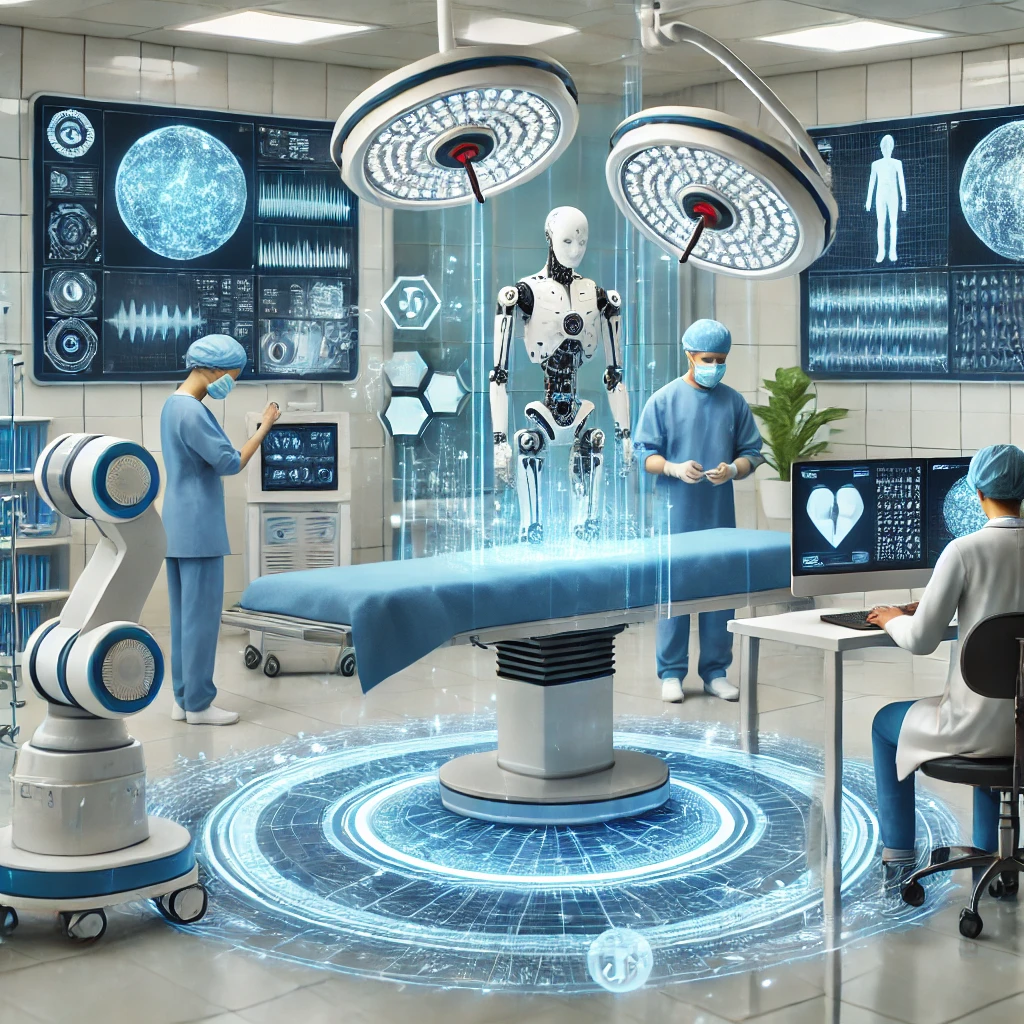
Imagine a world where medical diagnoses are faster, treatments are more personalized, and healthcare systems operate with unparalleled efficiency. Artificial Intelligence (AI) is making this vision a reality.
By harnessing the power of machine learning, natural language processing, and predictive analytics, AI is transforming the healthcare industry at an unprecedented pace. But what does this mean for patients, providers, and the future of medicine?
In this article, we explore how AI is revolutionizing healthcare delivery. From enhancing diagnostic accuracy to improving patient outcomes, AI’s role in medicine is both promising and transformative. Join us as we uncover five key areas where AI is reshaping the healthcare landscape and delivering solutions that were once thought impossible.
Enhancing Diagnostic Accuracy
One of the most significant contributions of AI in healthcare is its ability to improve diagnostic accuracy. Traditional diagnostic methods often rely on a physician’s expertise and subjective interpretation. However, AI algorithms can analyze vast amounts of data, such as medical images, lab results, and patient history, to identify patterns that may elude even the most experienced doctors.
For example, AI-powered tools like IBM Watson Health and Google’s DeepMind have demonstrated remarkable success in detecting diseases such as cancer, diabetes, and cardiovascular conditions. In radiology, AI can process thousands of medical images to identify abnormalities with precision, reducing the likelihood of missed or incorrect diagnoses.
This technological advancement not only supports clinicians but also enhances patient care. Faster and more accurate diagnoses enable earlier interventions, which can significantly improve treatment outcomes. As a result, AI is setting new standards in diagnostic excellence.
Personalizing Treatment Plans
AI is also revolutionizing the way treatments are tailored to individual patients. Traditional medical protocols often take a one-size-fits-all approach, but AI enables the creation of personalized treatment plans based on a patient’s unique genetic makeup, lifestyle, and medical history.
For instance, precision medicine—a field heavily reliant on AI—uses genomic data to predict how a patient will respond to specific treatments. Companies like Tempus and Foundation Medicine employ AI to analyze genetic information and recommend targeted therapies for cancer patients. This approach not only improves efficacy but also minimizes adverse effects.
Moreover, AI-driven platforms can monitor a patient’s progress in real-time, allowing healthcare providers to adjust treatments dynamically. Such innovations empower patients and clinicians alike, ensuring that medical care is both effective and adaptable.
Optimizing Healthcare Operations
Beyond clinical applications, AI is streamlining healthcare operations to reduce costs and improve efficiency. Hospitals and clinics often face challenges such as resource allocation, patient scheduling, and administrative bottlenecks. AI-powered systems address these issues by automating processes and providing data-driven insights.
For example, AI tools can predict patient admission rates, enabling hospitals to manage staffing and resources more effectively. Chatbots and virtual assistants, such as those developed by Babylon Health, can handle routine inquiries, freeing up healthcare professionals to focus on critical tasks.
Additionally, predictive analytics can identify trends and potential risks within healthcare systems. This allows administrators to implement proactive measures, such as infection control protocols or supply chain optimizations. The result is a more efficient and responsive healthcare infrastructure.
Improving Patient Engagement
Patient engagement is a critical factor in achieving positive health outcomes, and AI is playing a pivotal role in enhancing this aspect of care. Through AI-driven applications, patients can access personalized health information, receive reminders for medications, and track their progress toward health goals.
Wearable devices, such as Fitbit and Apple Watch, use AI to monitor vital signs and activity levels. These devices provide real-time feedback and actionable insights, encouraging users to make healthier choices. Additionally, AI-powered platforms like Ada Health offer symptom checkers that guide patients in seeking appropriate medical care.
By fostering greater interaction and communication between patients and healthcare providers, AI is empowering individuals to take an active role in their health. This shift toward patient-centered care not only improves satisfaction but also enhances overall health outcomes.
Accelerating Drug Discovery and Development
The process of developing new drugs is often lengthy and expensive, with many potential treatments failing in clinical trials. AI is revolutionizing this domain by accelerating drug discovery and improving the likelihood of success.
AI algorithms can analyze vast datasets to identify promising drug candidates and predict their efficacy. Companies like BenevolentAI and Insilico Medicine use machine learning to sift through billions of chemical compounds, drastically reducing the time required to identify viable options.
Furthermore, AI can optimize clinical trials by selecting suitable participants and predicting outcomes. This not only speeds up the research process but also ensures that new treatments reach patients faster. The potential to address unmet medical needs has never been greater, thanks to the power of AI.
Revolutionizing Preventive Healthcare
AI is playing a significant role in shifting healthcare from reactive to preventive models. By analyzing historical and real-time data, AI systems can predict potential health issues before they become critical. Predictive analytics powered by AI helps identify at-risk populations, enabling early interventions.
For instance, AI can assess lifestyle factors, genetic predispositions, and environmental influences to recommend preventive measures. Health apps integrated with AI, such as Noom and HealthifyMe, guide users in maintaining healthy habits through personalized recommendations. Early detection and prevention reduce healthcare costs and improve long-term outcomes.
By focusing on prevention, AI empowers both individuals and healthcare systems to act proactively, fostering a healthier society.
Supporting Mental Health Care
Mental health is an area where AI is making a profound impact. AI-powered platforms like Woebot and Wysa provide 24/7 mental health support through conversational agents. These tools use natural language processing to engage users in meaningful dialogues, offering coping strategies and emotional support.
Moreover, AI can analyze behavioral patterns and identify signs of mental health disorders such as depression or anxiety. By monitoring data from wearable devices or social media activity (with consent), AI helps clinicians gain insights into a patient’s mental health status.
These innovations make mental health resources more accessible, reducing stigma and improving support for those in need.
Advancing Remote and Telehealth Services
The rise of telehealth has been accelerated by AI’s capabilities. Virtual consultations powered by AI enhance the efficiency and accuracy of remote healthcare. AI-driven diagnostic tools enable doctors to assess patients remotely, reducing the need for in-person visits.
Additionally, telehealth platforms integrated with AI can prioritize patient cases based on severity, ensuring timely care for critical conditions. Tools like TytoCare allow patients to conduct self-examinations using AI-guided devices, bridging the gap between home care and professional diagnosis.
By improving accessibility and convenience, AI-driven telehealth services are reshaping how healthcare is delivered, especially in underserved regions.
Transforming Medical Education
AI is also revolutionizing medical education and training. Virtual reality (VR) and AI simulations create immersive environments where medical students and professionals can practice complex procedures. These tools provide real-time feedback, enhancing learning outcomes and building confidence.
Platforms like Touch Surgery use AI to guide users through surgical procedures step-by-step. Additionally, AI helps educators identify knowledge gaps by analyzing student performance data, allowing for personalized learning experiences.
By integrating AI into medical education, the healthcare workforce is better prepared to meet the challenges of modern medicine.
Conclusion
AI is undeniably transforming the healthcare industry, bringing advancements that benefit patients, providers, and society as a whole. From enhancing diagnostic accuracy and personalizing treatments to streamlining operations and accelerating drug discovery, AI’s impact is profound and far-reaching.
As we embrace this technological revolution, it is crucial to address challenges such as data privacy, ethical considerations, and equitable access to AI-driven solutions. By fostering collaboration between technology developers, healthcare professionals, and policymakers, we can ensure that AI continues to revolutionize healthcare delivery in a way that is both innovative and inclusive.
The future of medicine is here, and it is powered by AI. Are you ready to embrace this change? Share your thoughts in the comments below or join the conversation to explore how AI is shaping the healthcare of tomorrow.

Explicapramim is a blog dedicated to simplifying the world of finance in an accessible and practical way. Created by Rui Hachimura, the blog provides valuable tips on financial planning, investments, personal budgeting, and strategies to achieve financial independence. Whether you’re a beginner or someone looking to improve your financial knowledge, Explicapramim offers clear and actionable insights to help you make smarter money decisions.